
K-12 Secure Vestibules: Retrofit Sequencing in Occupied Schools
Parents and students expect private and public schools to be safe environments for learning. Decision-makers and builders commonly make adjustments to educational buildings to keep threats outside and away from the classrooms and the facilities.
A retrofit procedure can make educational spaces more comfortable for learners while maintaining a welcoming environment.
The Value of School Security Upgrades and Retrofits
Security upgrade projects for K-12 schools can deter trespassers from accessing hallways and facilities. This often means fewer safety concerns for anyone setting foot in an academic building, including teachers and staff.
The right security windows, doors, and transaction systems provide additional time for incident response teams to act. Whether this is contacting authorities for assistance or following lockdown procedures, every second counts. School security upgrades also help protect an institution’s reputation in the event of an incident.
Retrofits and upgrades can also be completed during school holidays and other times when the facilities are closed, avoiding disruptions to regular school operations.
Emphasis on High-Security Locks and Doors
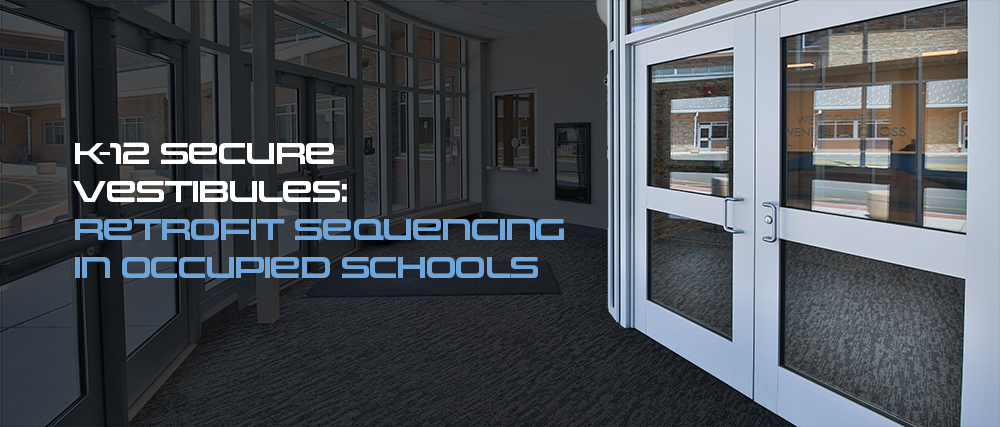
Special attention must be paid to school entry doors and locks. Incorporate a school security vestibule that creates a small zone between the outside world and an academic building. With a security vestibule, visitors enter through an outer door and are cleared by a secretary or faculty member before proceeding with entry. This area can function as a controlled screening point, ensuring that only authorized visitors are granted access while helping to identify trespassers and prevent weapons from entering the building.
Enhance school entrance security during a retrofit project by making a single entry space for visitors subject to check-in. Attack-resistant doors, access control, and locks that activate from the inside are also a must-have for maintaining control.
Creating Ballistic School Entrances
Not all school entry doors are made the same. Understanding security standards and ratings helps decision-makers know what to expect from installations in a K-12 school:
- Ballistic and forced entry doors: These installations are engineered to handle shots of a specific caliber. Instead of the bullets penetrating materials, the energy is absorbed across multiple layers of metal and specialized glass.
Takeaways for Ballistic-Rated Glazing for Schools
The right security approach matters for K-12 schools. According to the National Glass Association, the average duration of an active shooter event is approximately eight minutes. Brief incidents can be as little as 90 seconds, but this still leaves enough time for major devastation to occur. Choosing ballistic-rated and forced-entry solutions near school entryways gives faculty and staff the time needed to intervene appropriately.
Ballistic-rated glass allows you to see through the installation for improved oversight near entrances, parking lots, courtyards, and similar locations with regular foot traffic. Schools must investigate UL 752 standards to determine the appropriate level of protection. The standard sets 10 protection levels based on the type of weapon, the weight and speed of the ammunition, and the number of rounds fired. Depending on the product’s rating, it’s possible to safeguard individuals from handguns up to higher-powered rifles and shotguns.
U.S. Bulletproofing offers a wide range of security products and accessories for K-12 schools. Our team is proud to make a difference in districts across the nation. One of our more recent success stories involved supplying ballistic glass and vestibules for the renovation of Wendell L. Cross Elementary School in Waterbury, Connecticut.
Request a Quote for Security Products
At U.S. Bulletproofing, we are ready to help you get the school security upgrades you need. Request a quote for our solutions today.