
How Bullet-Resistant Glass Really Works
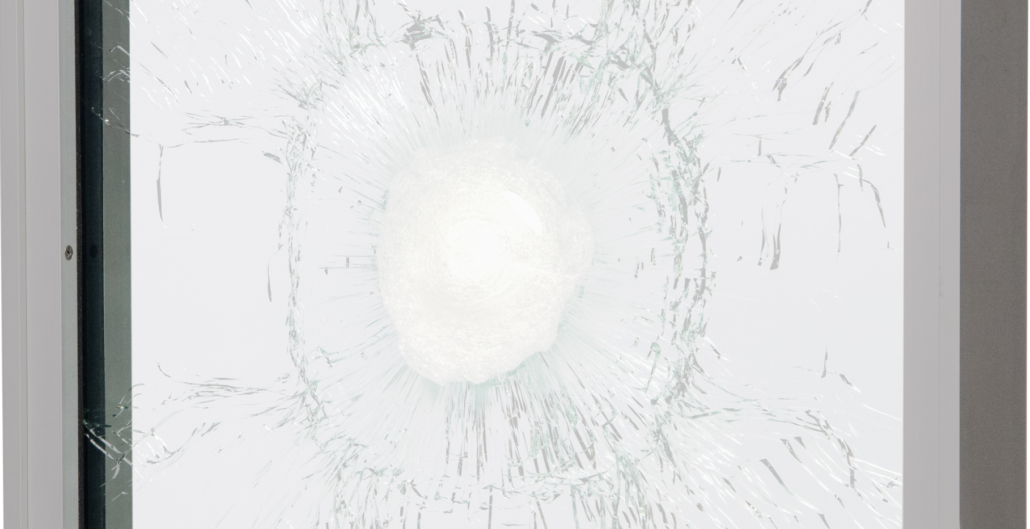
Over the years, there has been a demonstrable increase in the power of handheld firearms, as well as their accessibility. In response, bullet-resistant technology has also come a long way. As guns have become more powerful and more readily available, protecting your property and the people inside it has become more imperative.
One of the best steps you can take to secure your building is to install complete bullet-resistant sytsems that are comprised of both a ballistic rated frame and glass. There’s a reason why high-risk properties — from embassies to banks to schools — have come to rely on windows and doors made from these materials to secure and protect them. As a leader in the design, engineering and creation of these high-security products, U.S. Bullet Proofing is proud to supply them to customers around the world who value keeping their properties safe. How does bullet proof glass work? Read on to learn the answer as well as why the term “bullet proof” is a bit of a misnomer.
How Bullet Proof Glass Works
Although the term “bullet proof” is used frequently to describe windows and doors made with bullet resistant glass, the truth is that the protection they offer is more complicated. A modern bullet can travel at speeds of up to 1,800 miles per hour after it leaves the barrel of a gun. Even though a single bullet is very small, the amount of concentrated energy it can transfer to a target is extremely powerful. Repeated impacts with such force can wear down even the hardest materials over time, especially when talking about something as inherently rigid as glass.
Bullet-resistant glass, however, is designed and manufactured to offer a greater level of protection than standard windows or doors can provide. The key is in how the glass reacts to the force exerted by a bullet.
Absorbing Energy
Standard glass has very little elasticity—it tends to break under relatively low force rather than bend like metals, wood, or plastics. When struck by a bullet, the impact energy is enough to shatter conventional glass instantly. Bullet-resistant glazing, however, works differently. Instead of altering the glass itself, it relies on layered materials that absorb and dissipate the bullet’s energy before it can fully transfer through the system.
There are four primary types of ballistic-rated glazing: acrylic, polycarbonate, glass-clad polycarbonate, and all-glass laminates.
Acrylic and polycarbonate are monolithic plastics typically used for lower levels of ballistic protection, such as handgun resistance. They are well-suited for interior applications like ticket counters, reception areas, and service windows. Acrylic—commonly known as plexiglass—offers clarity comparable to standard glass but is entirely plastic. Depending on the required level of protection, acrylic panels can be manufactured up to one to two inches thick, providing enough flexibility to absorb and reduce the force of impacting rounds. For lower-caliber threats, acrylic can even deflect projectiles rather than simply slowing them.
Polycarbonate, by contrast, is a softer and more ductile material. Instead of deflecting bullets, it is designed to capture them within the glazing. This makes it suitable for slightly higher levels of ballistic protection and provides excellent durability under repeated impacts.
A widely used solution for enhanced protection is glass-clad polycarbonate, which consists of layers of polycarbonate laminated between sheets of glass. In this configuration, the outer glass layer may fracture upon impact, but the polycarbonate layer absorbs much of the bullet’s energy. As the projectile continues through the assembly, each subsequent layer further reduces its velocity and kinetic energy. By the time it reaches the inner layers, the bullet has lost enough energy to prevent full penetration. This system offers higher ballistic performance while maintaining a thinner, lighter profile compared to solid alternatives.
The final category is all-glass laminate, composed entirely of multiple layers of glass bonded together. This option provides exceptional strength and durability, particularly at higher ballistic ratings. However, achieving protection against high-powered weapons requires increased thickness, resulting in significantly heavier glazing assemblies.
Choose U.S. Bullet Proofing to Protect People and Property
Although no protection method is 100% effective against all threats, bullet-resistant windows and doors from U.S. Bullet Proofing offer you exceptionally high levels of security. Our in-house engineering capabilities enable us to develop and manufacture products that will meet your needs. Our products are built to withstand the highest levels of ballistic protection levels. We have developed our products to complement today’s architectural doors and windows so they will fit seamlessly into your building’s design and aesthetics.
Since 1991, we have developed a strong reputation for creating the best security products available. Everything we make has been developed with pride and an exceptional attention to detail that make our offerings the industry standard. If you want to learn more about what we have to offer, reach out and get in touch with us today.
Frequently Asked Questions About How Bullet-Resistant Glass Really Works
How Strong Is Bulletproof Glass?
Bulletproof glass comes in various levels of strength and durability. No glass is fully bulletproof, but you can choose from various types of bullet-resistant glass based on your needs and your property’s level of risk.
Is Bulletproof Glass Breakable?
Yes, bulletproof glass is breakable under certain conditions. While it is designed to stop bullets, shots from high-powered guns can shatter or break through glass. Bulletproof glass can also break after impact from multiple shots.
How Long Does Bullet-Resistant Glass Last?
Bullet-resistant glass typically lasts between 10 and 30 years, but factors such as maintenance, environmental conditions, and ultraviolet (UV) exposure can impact this. Impact from an attempted break-in or bullets requires immediate replacement, and changes such as delamination, yellowing, or scratches could necessitate eventual replacement. Proper handling, cleaning, and maintenance are important for prolonging longevity.
Does All Bullet-Resistant Glass Work the Same?
No, all bullet-resistant glass does not work the same. Manufacturers engineer it with varying materials and thicknesses to protect from specific threats such as bullet speed, caliber, and shot count. While some glass is capable of stopping bullets from small handguns, stronger bullet-resistant glass can withstand bullets from high-power rifles.
What Levels of Bullet-Resistant Glass Are Available, and How Do I Choose the Right One?
Bullet-resistant glass is available in 8 different levels based on Underwriters Laboratories (UL) 752 ratings. Levels 1 through 3 protect against handguns, while levels 4 through 8 protect against high-powered rifles. The ideal level for your application depends on risk assessment. For example, glass protecting artwork such as the Mona Lisa should be stronger than glass protecting a small jewelry store. Similarly, a government building requires more protection than a commercial property due to the increased risk of potential attacks.
Levels 1 through 3 are typically the best option for properties with lower-level risk, such as schools and commercial spaces. Levels 3 through 5 are usually best for banks, and levels 6 through 8 are optimal for high-risk, high-security applications such as government or military facilities.
To learn more about UL 752 Ballistic Protection Levels, be sure to visit our page for more information on ballistic standards.