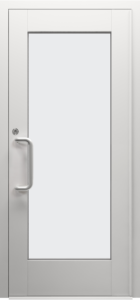
Storm Impact and Ballistic Door

USAD 1000 FEMA Door

The USAD 1000 FEMA Door is a single leaf, high security aluminum door designed for the exterior envelope to provide multi-threat protection against tornadoes, hurricanes and extreme storm conditions, as well as high power rifles.

Alongside our USAD 650 FEMA windows, these storm impact and bulletproof high-security doors are the top of the line when it comes to security solutions for sensitive properties. The reputation for quality and innovation U.S. Bullet Proofing has earned over the years has led to our products being installed in buildings around the world where the protection of people and property are of the utmost importance. These heavy-duty security doors can be found in government offices, embassies, military complexes, industrial facilities and other high-value sites.

Our commitment to innovation means we deliver the most unique designs that provide security as well as energy efficiency. U.S. Bullet Proofing’s in-house engineering department has the skill and expertise to provide our customers with a solution to meet their needs — built with precision. These qualities and more add up to make us a recognized leader throughout the industry.

Full Vision

Minimum Door Size: 41” x 87”

Maximum Door Size: 31” x 79-3/4”

The standard glazing for this product features USBP’s proprietary 1-3/4-inch clear multi-ply glass and polycarbonate construction, combining missile impact and ballistic resistance in a single glazing unit.

Materials: All aluminum extrusion shall be 6063-T5 alloy and temper or equal.

Standard Finish: Clear anodized or dark bronze anodized standard finishes with a custom Fluoropolymer paint also available.

Standard door hardware: Heavy-duty USBP proprietary hinges, secure bolt locks with Corbin Russin lever trim with a heavy duty surface mounted closer.

Boxing: U.S. Bullet Proofing doors are carefully packed in plywood boxes with internal wood 2” x 4”s. Each unit is cushioned throughout with Styrofoam packing to prevent movement inside the box. Each box is marked with the identification of the unit and the shipping address. The weight and cubic feet are indicated. Each box is further marked with “Up” arrows, indicating how the box is to be transported and stored.

Shipping: Each box should be visually inspected from the outside for any damages that may have occurred during shipping. A damaged box will often result in a damaged door, especially in overseas shipping. In the event of damages, photograph the box and notify the factory and the freight company. This must be done within 30 days after receipt of the unit.

Storage: It is not desirable to store units for long periods of time. However, this is often unavoidable due to construction schedules. If the units must be stored, they should be placed in a dry warehouse with moderate temperatures. High temperatures and humidity can cause formation of vapor inside the wrapping, thus causing oxidation or corrosion of parts.

All boxes are to be placed in the upright position as indicated by the up arrows. They should not lean against a wall. The boxes should not be placed in close proximity of new cement or plaster walls.

In the event that water penetrates the storage space, it is recommended that the units be unboxed to prevent internal damage. They should be stored in an upright manner, as if still in the box.

Unpacking: Care should be taken when opening the door box to prevent damage to the unit. Also, persons unpacking the box should be aware that there are loose pieces contained in the box. Care should be exercised not to lose these parts (door closer, lock cylinders with keys, shims, mounting hardware, caulking, instructions, and technical data for associated components).

Transparencies: The protected side of the transparency in some instances is polycarbonate and susceptible to scratching. Care should be taken when cleaning these surfaces. Use a mixture of liquid soap and water and clean, soft clothes or sponges for cleaning. The following cleaning agents have been found to be compatible with polycarbonate: Formula 409, Joy, Palmolive Liquid, Top Job, Windex with Ammonia D.

Fresh paint splashes, grease, and smeared glazing compounds can be easily removed before drying by rubbing lightly with a good grade of VM&P naphtha, isopropyl alcohol, or butyl cello solve (2- butoxy ethanol). Do not use butyl cello solve in direct sunlight.

Using a mild automobile polish can minimize scratches and minor abrasions. Three such products that tend to polish and fill scratches are: Johnson’s Paste Wax, Novus Plastic Polish #1 & #2 (Novus Inc., Minneapolis, MN), and Mirror Glaze Plastic Polish M.G.M10 (Mirror Brite Polish Co., Pasadena, CA). It is suggested that a test be made of a sample with the product selected and that the polish manufacturer’s instruction be followed.

Important Don’ts:

  • DO NOT use abrasive or highly alkaline cleaners on polycarbonate.
  • Never scrape or scrub polycarbonate with squeegees, brushes, razor blades, or other sharp instruments.
  • Taping notices, etc. to this surface should be avoided. The tape adheres to the mar-resistant coating and peels the coating off when the tape is removed.
  • DO NOT use benzene, gasoline, acetone, or carbon tetrachloride on polycarbonate.
  • DO NOT clean polycarbonate in hot sun or at elevated temperatures.
  • In cleaning glass, it is recommended that Windex with Ammonia D or other compatible household window cleaners be used to minimize streaking.

Aluminum: The aluminum trim can be cleaned similar to the transparent surfaces. Isopropyl alcohol can be used for tougher spots. Care should be taken not to scratch the aluminum surface.

Hardware: Maintenance of hardware devices should be in accordance with the manufacturer’s specifications. A common cause of failures in electrical devices is improper electrical connections to a power supply at the jobsite. Power spikes and fluctuations can also cause damage. Improper grounding in some countries aggravates this situation. Closely follow hardware manufacturer’s instructions. Mechanical failures are most often caused by excessive amounts of dirt accumulating inside the mechanism. The use of lubricants such as WD40 and the like should be avoided. They act as a magnet in attracting dirt and sand. Another common cause of mechanical malfunctions is when devices are manhandled far beyond the manufacturer’s tolerances. If the locks are in proper adjustment, there is no need to use excessive force to open or close a device.

The most common cause for door malfunctioning is improper installation. The doorframes must be plumb and square. Misalignment is easily detected by observing if the locks function freely without hanging up or causing friction binds.

Another point to look for is inconsistency of the closure gap. If the gap is wider at the top than the bottom, the unit is misaligned. However, if the door and locks function freely, then no further adjustment is recommended. With the door closer disconnected and the door opened at a 45- degree angle, the leaf should remain in one place. If the door drifts open or closed, then the frame is not level (vertical alignment).

The best way to readjust the doorframe for lock adjustment is to remove the door stops, thus exposing the mounting bolts. Loosen the bolts and physically move or change the shims to be located between the wall and the outside edge of the frame. Removing shims for one side or adding to the other side will bring the frame in closer or spread further apart. Retighten all bolts upon completion. Reinstall the door stops. If the frame is not vertical, then it is recommended that the mounting bolts be removed one at a time and the hole elongated in the direction that the door must be moved. If the door leaf is dragging, then elongate the mounting holes vertically. Gently pry the doorframe up until sufficient clearance is obtained. Retighten all bolts upon completion.

The hinges should be checked periodically to ensure that all the screws are tight. Loosening the hinge screws, repositioning the door, and retightening the screws may accomplish some minor adjustment. Another cause for door misalignment (assuming the installation was correct) is settlement of the building and/or the wall not being capable of sustaining the weight and constant movement of the door.

Warranty: All necessary replacement of parts and adjustments not occasioned by accident or misuse shall be made at the vendor’s expense when notified within 30 days after customer receipt of product. All products are warranted for a period of one year from the date of customer receipt. During warranty period, all defects not caused by attack, accident, or misuse through fault or negligence by the customer shall be adjusted or replaced at the vendor’s expense (excluding transportation costs).

Disclaimer: In as much as U.S. Bullet Proofing has no control over the use to which others may put this material, it does not guarantee that the same results, as those described herein will be obtained. Nor does U.S. Bullet Proofing guarantee the effectiveness or safety of any possible or suggested design as illustrated herein by any photograph, technical drawing, and the like. Each user of products or design or both should make his own tests to determine the suitability of the product or design or both for his own particular use.
Frequently Asked Questions


What level of ballistic protection is appropriate for my facility?

It depends on the level of threat you believe your property is likely to face. For convenience stores, fast food restaurants, and other properties frequently targeted by petty thieves, a lower level of protection designed to stop handgun fire should be sufficient. However, banks, embassies, and other higher-risk facilities should have something stronger to resist higher-caliber bullets from rifles.

Does U.S. Bullet Proofing assist with installation?

We do not provide installation services directly, but can recommend qualified glazing contractors in your area who are experienced with ballistic glass.

How should security doors be maintained?

A mild liquid detergent and water should be enough to keep these doors clean. Be sure to use a soft cloth for washing and avoid using highly alkaline or abrasive cleansers.

Can U.S. Bullet Proofing construct this door to fit my facility’s design?

Our high-security doors are designed to fit into most modern architectural styles. There are several finish options for you to choose from, so get in touch with us to learn more.  

USAD 1000 FEMA Door — Storm Impact and Ballistic Door

This door protects your building from multiple levels of threats, including:

  • Weather: This impact-resistant door can stop flying debris from entering your building during storms. Energy-efficient materials keep spaces comfortable year-round and help lower utility bills.
  • Ballistics: Tested to UL 752 (11th and 12th Edition), these doors provide the high level security with protection from high power rifles, providing protection against a 7.62mm full metal jacket NATO round.

Aluminum Security Door Applications and Use Cases

The USAD 1000 FEMA Door blends with your interior and does not look like an obvious security feature. Yet, when combined with security personnel, alarm systems, cameras, and other safety measures, it can protect commercial, residential, and government spaces from multiple threats.

The USAD 1000 FEMA Door preserves lines of sight, as well, so your security team can maintain visibility and keep threats in their field of vision. These doors can work in:

  • High-risk environments: Doors that meet ballistics standards for bullets and explosions are used in high-risk situations such as conflict areas, high-risk embassies and consulates, and other applications.
  • Storm Shelters: With reinforced walls and FEMA-tested products, storm shelters are essential for protecting critical services and public facilities where people seek safety during extreme weather events. USBP’s USAD 1000 FEMA Doors and USAW 650 Windows provide the necessary system to help provide the highest level of protection while optimizing natural light, line of site and aesthetics to any building.
  • Military installations: Military bases and locations need to maintain good sight lines and provide easy access to authorized personnel, but also need to be ready for improvised explosives, coordinated attacks, and other threats.
  • Government buildings: The U.S. Capitol building and many other government areas use blast-resistant walls, doors, and windows to protect workers and visitors from threats.

Contact us to learn more about solutions for your organization.